
 Deutsch
 Francais
 Italiano
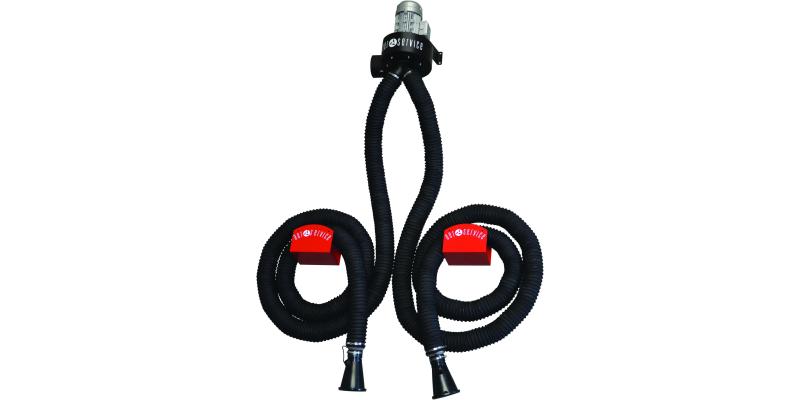
In environments where internal combustion engines are tested, the production of exhaust gases represents a significant operational and safety challenge. During procedures such as motor power tests, FAP tests, and dynamometer operations, high concentrations of harmful emissions are generated in enclosed spaces. Efficient extraction systems are therefore essential to maintain air quality, ensure operator safety, and comply with environmental regulations.
Wall-mounted gas extraction units provide a compact and efficient solution for facilities where floor space is limited but reliable exhaust removal is required. Installed directly on vertical surfaces, these systems eliminate the need for bulky floor-mounted equipment while delivering targeted extraction exactly where emissions are produced.
Why Wall-Mounted Extraction Systems Are Effective
Wall-mounted extraction systems are specifically designed to optimize workspace organization while maintaining high extraction performance. By integrating the extraction unit into the wall structure, workshops and laboratories can keep test areas free from obstructions, improving both operational efficiency and safety.
These systems are commonly used in:
-
Automotive engine testing facilities
-
Industrial research laboratories
-
Dyno test rooms
-
Maintenance workshops performing diagnostic testing
The localized extraction capability ensures that exhaust gases are captured directly at the source before they disperse into the surrounding environment. This approach significantly reduces operator exposure to hazardous pollutants such as carbon monoxide, nitrogen oxides, and particulate matter.
Applications in Motor Power Tests and FAP Testing
During motor power tests, engines are operated under controlled load conditions to evaluate performance parameters such as torque, horsepower, and fuel efficiency. These procedures often generate continuous exhaust flow at varying temperatures and pressures.
Similarly, FAP tests (Diesel Particulate Filter testing) require precise monitoring of exhaust emissions to verify filtration efficiency and regulatory compliance. In both cases, reliable exhaust extraction is essential to prevent accumulation of harmful gases within the testing environment.
Wall-mounted gas extraction systems support these applications by offering:
-
Consistent airflow capacity
-
Compact installation footprint
-
Flexible duct connection options
-
Compatibility with test bench layouts
Their design allows them to integrate seamlessly with engine test cells and diagnostic equipment.
Selecting the Right Wall-Mounted Gas Extraction Unit
Choosing the appropriate extraction system requires careful evaluation of several operational factors. The most relevant parameters include:
-
Airflow capacity, which must match the exhaust output of the engines under test
-
Temperature resistance, particularly when handling high-temperature exhaust streams
-
Duct diameter and configuration, to ensure optimal airflow efficiency
-
Integration with test benches or dyno systems
Facilities conducting frequent motor power tests or FAP testing should prioritize systems capable of continuous operation and high extraction reliability.
Conclusion
Wall-mounted gas extraction units represent an efficient and space-saving solution for environments where engine testing generates hazardous emissions. By combining compact installation with effective localized extraction, these systems improve workplace safety, support regulatory compliance, and maintain optimal air quality.
For automotive laboratories, engine testing centers, and industrial workshops, selecting the right wall-mounted extraction system is a critical step in building a safe and efficient testing infrastructure.