
 Deutsch
 Francais
 Italiano
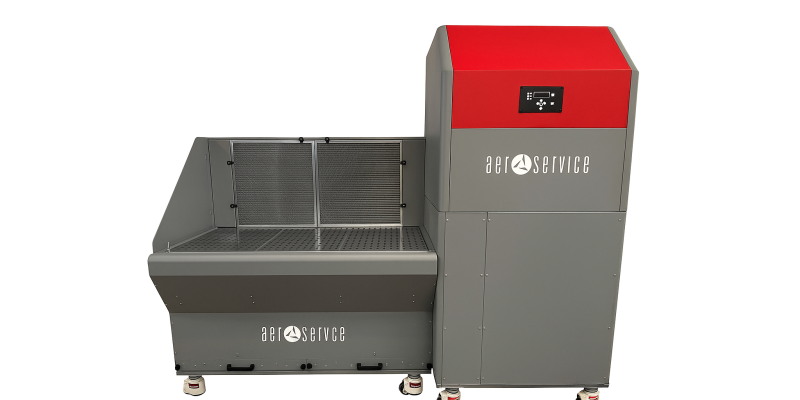
What Is a Downdraft Bench?
A downdraft bench is a worktable equipped with a built-in dust collection system. The working surface is typically perforated, allowing air to be drawn downward through the table. This airflow captures dust, fumes, and small particles generated during operations such as grinding, sanding, polishing, or deburring. For this reason, the system is often described as a downdraft bench dust collector.
Unlike traditional extraction arms or overhead hoods, a downdraft bench captures contaminants at the point of generation, reducing the spread of airborne particles in the workshop. This makes it particularly suitable for processes that produce fine dust or heavy particulate matter.
How Does a Downdraft Bench Work?
The operating principle is based on controlled airflow. A fan or extraction unit creates negative pressure beneath the work surface. As dust and fumes are produced, they are pulled downward through the perforations in the table. The contaminated air then passes through a filtration system, which may include pre-filters, cartridge filters, or HEPA filters, depending on the application and required air quality level.
After filtration, the cleaned air can either be returned to the workspace or exhausted outside, in compliance with local regulations. This process ensures continuous dust collection without interfering with the operator’s workflow.
Key Components of a Downdraft Bench
A typical downdraft bench consists of:
-
A perforated work surface for uniform air intake
-
An extraction fan or motor unit
-
A filtration system for dust and fine particulates
-
A dust collection drawer or container for easy maintenance
Some models also include side or back panels to improve airflow control and increase capture efficiency.
Applications and Benefits
Downdraft benches are commonly used in industries such as metal fabrication, woodworking, composites processing, and plastic manufacturing. They are especially effective for manual finishing operations where localized dust generation is constant.
The main benefits include improved air quality, reduced operator exposure to hazardous dust, cleaner work environments, and compliance with occupational safety standards. By capturing contaminants at the source, a downdraft bench also reduces the load on general ventilation systems.
Choosing the Right Downdraft Bench
When selecting a downdraft bench, it is important to consider the type of material processed, the volume of dust produced, and the required filtration efficiency. Factors such as airflow capacity, filter type, and maintenance requirements should be evaluated to ensure optimal performance and long-term reliability.
In summary, a downdraft bench is an efficient and practical solution for dust collection in many industrial environments, providing both safety and operational benefits.